
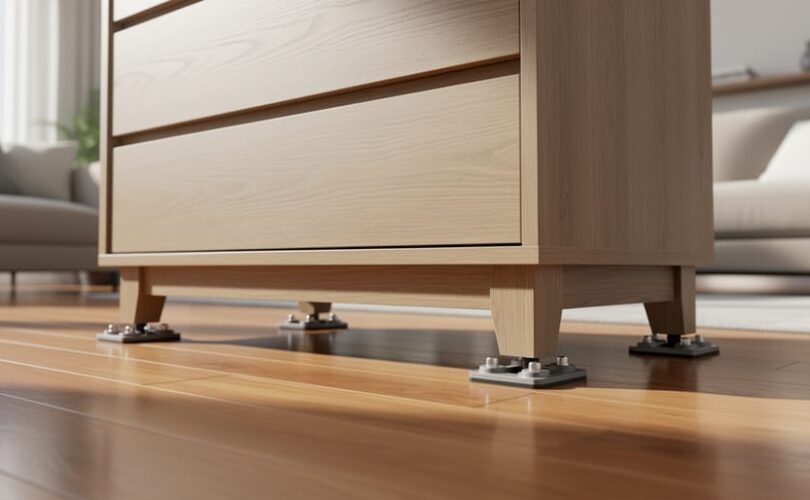
Furniture sliders are smooth discs or pads that attach to the base of chairs, tables, sofas, and other heavy items, letting you glide them across floors without scratching, scuffing, or straining your back. They work by reducing friction between furniture legs and your flooring, transforming a challenging push into an easy slide. Whether you’re rearranging a living room, moving a refrigerator for cleaning, or preparing for a full relocation, the right sliders protect both hardwood, tile, and carpeted surfaces while making heavy lifting unnecessary.
Choosing the right type matters. Felt sliders work best on hard surfaces like wood and laminate, while plastic or polyethylene options glide smoothly over carpet. Most slider sets can handle 400 to 600 pounds when weight distributes evenly, making them suitable for everything from dining chairs to full bookcases. You’ll find reusable models that stick with adhesive backing and permanent nail-on versions for furniture you rarely move.
At Ottawa’s Smart Move, we use professional-grade sliders on every job because they deliver what our customers value most: floors that stay pristine and belongings that arrive unscathed. The small investment in quality sliders, typically under $15 for an eight-piece set, saves you from costly floor repairs and makes any move safer and more efficient.
What Are Furniture Sliders and Why They Matter
Furniture sliders are small, low-friction pads that attach to the base of furniture legs or sit underneath heavy items to let you glide them across a floor with minimal effort. Instead of lifting a 200-pound dresser and risking your back or your baseboards, you place sliders under each leg and push the piece as if it were on wheels. The sliders work by reducing friction between the furniture and the floor, turning what would be a dragging, floor-scraping ordeal into a smooth slide.
The design is elegantly simple: sliders use materials like felt, polyethylene, or durable rubber foam to create a barrier between furniture and flooring. For hard floors such as hardwood or tile, soft felt or foam sliders cushion the contact and prevent scratches. For carpeted surfaces, smooth plastic or polyethylene sliders glide over the pile without snagging. Some models, like the Everbilt furniture sliders and socks available at Home Depot, are dual-sided to work on both hard and carpeted floors, making them versatile for homes with mixed flooring.
Furniture sliders fit into both DIY moves and professional moving services. Homeowners rearranging rooms or preparing for a move can use reusable sliders as an affordable, accessible tool. Professional movers, including teams at Ottawa’s Smart Move, rely on sliders to protect clients’ floors and speed up the job without the risk of damage or injury. Whether you’re tackling a weekend furniture shuffle or coordinating a full relocation, sliders are a practical solution that balances ease, safety, and floor protection.
Types of Furniture Sliders for Different Flooring
Sliders for Hard Floors
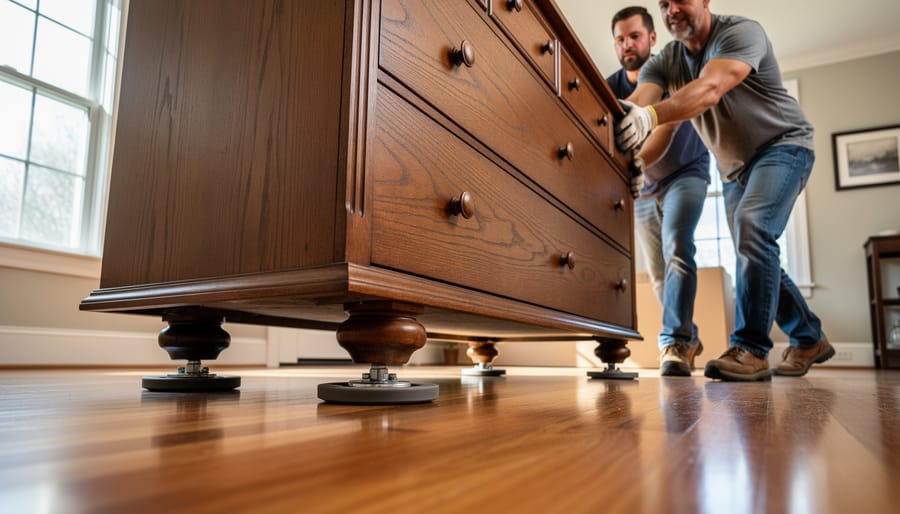
Hard floors like hardwood, laminate, and tile need gentle protection during furniture moves. Scratches, scuffs, and gouges can happen in seconds when you drag a heavy dresser or bookshelf across an unprotected surface. That’s where felt and soft material sliders come in.
Felt sliders are the go-to choice for hard flooring. The soft felt surface creates a cushion between your furniture legs and the floor, distributing weight evenly while you slide pieces across the room. This material glides smoothly without the abrasive friction that causes damage. Many current products use heavy-duty felt combined with durable rubber foam backing for stability and grip on the furniture itself.
Polyethylene is another common material you’ll find in sliders designed for hard floors. It offers a smooth, low-friction surface that won’t mar your finish. Some manufacturers combine materials to create sliders that work across multiple hard floor types, giving you flexibility if your home has a mix of hardwood in one room and tile in another.
The key benefit is damage prevention. Whether you’re moving a piano across oak flooring or repositioning a refrigerator on laminate, quality felt sliders protect your investment. They work by spreading the load and eliminating direct contact between hard furniture feet and your floor’s surface. For homeowners who’ve invested in quality flooring, this simple tool can save hundreds in potential repair costs during a move or rearrangement.
Sliders for Carpeted Floors
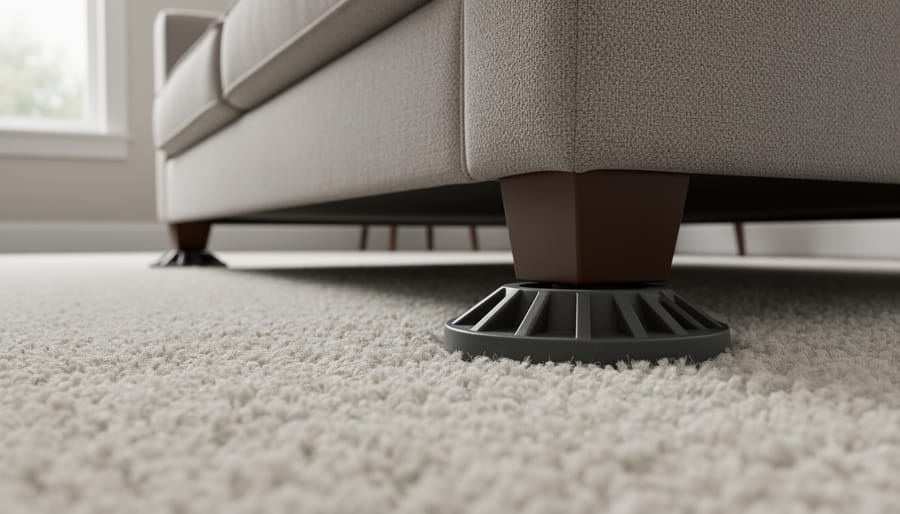
Moving furniture across carpeting presents a unique challenge. The thick pile creates significant resistance, making even lightweight pieces difficult to slide. Hard plastic or polyethylene sliders solve this problem by creating a smooth, rigid surface that glides over carpet fibers instead of getting caught in them.
Unlike the soft felt sliders used on hardwood, carpet sliders feature a firm plastic bottom that won’t compress into the carpet pile. The smooth polyethylene surface reduces friction dramatically, letting you push heavy dressers, sofas, and cabinets across the room with minimal effort. Current options like the 4-3/4 inch round plastic sliders available at major retailers demonstrate this design principle: a flat, hard surface that distributes weight while maintaining contact with just the top of the carpet fibers.
When choosing sliders for carpeted floors, size matters. Larger diameter sliders (around 4-3/4 inches) work better than smaller ones because they spread the furniture’s weight over more surface area. This prevents the slider from sinking into plush or thick-pile carpeting. Heavy-duty polyethylene sliders can handle 400-600 pounds of evenly distributed weight, making them suitable for substantial furniture pieces when you use multiple sliders per item.
The key is placement. Position sliders under each corner or leg of the furniture to balance the load. Once in place, the smooth plastic bottom transforms your carpeted floor into a low-friction surface, letting you reposition furniture during rearrangement or move it to the truck on moving day without the back-straining drag of lifting and carrying.
Combination Sliders and Universal Options
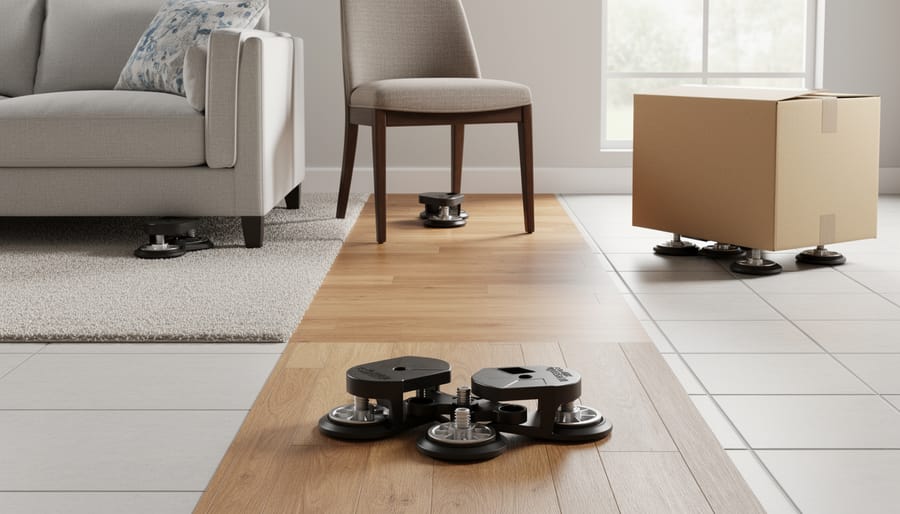
Combination sliders solve the headache of moving furniture across multiple room types during the same project. Dual-sided options, like the Everbilt 4-3/4 inch Round Plastic Furniture Sliders and Socks available at Home Depot, feature a soft fabric or felt side for hardwood and laminate, and a smooth plastic side for carpet. You simply position the appropriate surface face-down depending on your floor type. These universal sliders are most practical when your move involves transitioning furniture between carpeted bedrooms and hardwood living areas, or when rearranging an open-concept space with mixed flooring. They eliminate the need to buy separate sets for each surface, making them a cost-effective choice for whole-home projects or frequent furniture shuffling. Keep a set on hand if you regularly rearrange layouts or help friends and family with moves across different floor types.
Choosing the Right Furniture Sliders for Your Move
Weight Capacity Considerations
Weight capacity isn’t a one-size-fits-all specification when choosing furniture sliders. Heavy-duty sliders typically handle 400-600 lbs, but that range depends heavily on how evenly the weight spreads across the slider surface. A tall bookcase with a narrow base concentrates weight differently than a wide dresser, even if both weigh the same.
Using multiple sliders per piece matters more than most people realize. Distributing load across four sliders instead of two cuts the force on each slider in half, reducing the risk of crushing the slider or damaging your floor. For a 500-lb piano, place sliders at each corner to keep individual load points manageable. Single sliders under heavy furniture legs can sink into carpet or crack on hard floors.
Weight distribution also affects how smoothly items move. Uneven loading causes sliders to drag or skip, making you work harder and potentially scratching floors. Check that your furniture sits level before sliding, and position sliders directly under legs or at structural support points rather than random spots on the base. When moving particularly heavy pieces like appliances or solid wood furniture, err on the side of more sliders rather than fewer, the extra support protects both your floors and your back.
Installation Methods: Adhesive, Nail-On, and Reusable
When choosing furniture sliders, the installation method matters as much as the material. Each type serves different needs depending on how permanent your solution needs to be.
Reusable sliders are the most versatile option for both homeowners and renters. These simply press or snap onto furniture legs without any tools or adhesive. You can remove them after moving day and use them again for future rearrangements or when you relocate. They work perfectly for temporary situations like a one-day move or seasonal furniture swaps. Most slider sets available at retailers like Home Depot fall into this reusable category, making them accessible for DIY movers.
Nail-on sliders offer a permanent solution for furniture you move regularly across the same floor. These attach with small tacks or brads that secure the slider firmly to wooden furniture legs. They make sense if you frequently rearrange a room or need long-term protection on pieces like dining chairs that scrape during everyday use. The trade-off is commitment: once nailed on, they leave small holes if removed.
Adhesive-backed sliders sit between these two extremes. They stick firmly enough for extended use but can be peeled off when needed. These work well for lighter furniture or semi-permanent arrangements where you want stability without making alterations to your furniture legs.
For moving day specifically, reusable sliders give you the most flexibility without damaging your furniture or requiring installation time.
Where to Find Quality Furniture Sliders
Quality furniture sliders are widely available at both local hardware stores and online retailers, making them an accessible tool for anyone planning a move or furniture rearrangement. Home Depot carries options like the Everbilt 8-piece slider and sock sets designed for both hard and carpeted floors, while major online marketplaces offer extensive selections from brands like X-PROTECTOR and COVERCORNER. You’ll find options ranging from budget-friendly felt pads to heavy-duty sliders rated for 400-600 lbs of evenly distributed weight.
The variety available means DIY movers can easily pick up sliders suited to their specific flooring and furniture needs, while professional moving companies often stock multiple types to handle different client situations. Whether you shop in-store to see materials firsthand or order online for home delivery, furniture sliders remain an affordable investment that protects your floors and makes moving significantly easier. Most retailers organize their selections by floor type and installation method, helping you quickly identify reusable, adhesive-backed, or nail-on varieties that match your project.
How to Use Furniture Sliders Safely and Effectively
Safety Tips When Moving Heavy Furniture
Even with the best furniture sliders, moving heavy items safely requires proper technique and awareness of your limits. Start by clearing a path and removing any obstacles before you begin. When lifting, bend at your knees rather than your waist, keep the item close to your body, and engage your core muscles. Never twist while carrying weight; pivot with your feet instead.
If you are working with a partner, communicate clearly before each move. Designate one person to lead and count down (“lift on three”), and move at the pace of the slower person. When using sliders, one person should tilt the furniture slightly while another positions the slider underneath each leg or corner. Keep your movements controlled and deliberate, sliding the piece gradually rather than pushing hard.
Know when a job exceeds DIY capability. Furniture weighing over a few hundred pounds, awkward items like armoires or pianos, and pieces that must navigate stairs or tight corners often require professional equipment and expertise. If you are concerned about moving furniture cost versus the risk of injury or property damage, consider that professionals bring specialized dollies, straps, and trained teams who handle heavy loads daily.
Ottawa’s Smart Move employs movers trained in ergonomic lifting techniques and proper equipment use, ensuring both your furniture and your home remain undamaged. Sometimes the smartest move is recognizing when to call in the experts.
Beyond Moving Day: Other Uses for Furniture Sliders
Furniture sliders aren’t just for moving day. Once you’ve relocated, these simple tools earn their place in your household toolkit through regular use. Rearranging a room for better flow or to accommodate new furniture becomes a one-person job instead of requiring help. Slide the sofa to vacuum underneath it weekly, or shift the dining table to accommodate extra guests without the usual struggle.
Seasonal deep cleaning becomes far less daunting when you can easily access the spaces behind and beneath heavy pieces. Pull the refrigerator away from the wall to clean the coils, or move the washer and dryer to sweep away accumulated lint. These tasks that most people postpone suddenly feel manageable.
Home staging professionals rely on sliders to quickly transform spaces for showings, testing different furniture arrangements until they find the most appealing layout. If you’re preparing your home for sale, sliders let you experiment with configurations that maximize your space’s appeal without marking up your floors or exhausting yourself.
For households with mobility challenges, sliders make daily life more accessible. A senior living alone can adjust furniture placement without waiting for assistance, maintaining independence and control over their living space. Parents can safely rearrange a nursery as their child grows, adapting the room to changing needs.
The same principles that make sliders essential during a move apply to everyday household tasks. Whether you’re tackling room-by-room packing or simply refreshing your living space, having the right tools on hand makes the work easier and protects your investment in quality flooring.
Furniture sliders represent the kind of smart, practical solution that Ottawa’s Smart Move embraces in every relocation. Whether you’re tackling a DIY move or working with professional movers, the right tools make all the difference between a stressful ordeal and a smooth transition. Sliders protect your floors from scratches and dents while making heavy furniture manageable, even in tight spaces.
Beyond the immediate moving day benefits, reusable sliders align with eco-friendly moving practices by reducing floor damage and eliminating the need for disposable protection materials. They’re an investment that pays off whether you’re rearranging rooms seasonally or preparing to downsize before moving to a new home.
At Ottawa’s Smart Move, we combine professional expertise with efficient techniques and the right equipment to make every relocation safer and more efficient. While furniture sliders are excellent for DIY projects, some moves call for experienced hands and comprehensive planning. Our team understands the balance between empowering homeowners with practical tools and providing full-service support when it matters most. For your next move, consider how the right combination of smart tools and professional assistance creates the stress-free experience you deserve.