

Moving truck rental costs in Saskatoon vary based on truck size, rental duration, and distance traveled, with daily rates differing significantly between cargo vans suitable for small loads and 26-foot trucks designed for entire households. Pricing isn’t standardized across the industry, so understanding the factors that influence your final bill makes the difference between a budget-friendly move and an unexpectedly expensive one.
The size of truck you choose drives the base rate, but that’s only part of the equation. Mileage limits, insurance options, fuel policies, and seasonal demand all affect what you’ll pay. Companies like U-Haul, Penske, and Budget serve Saskatoon with fleets ranging from pickup trucks and cargo vans to 26-foot moving trucks, each designed for different home sizes. U-Haul operates a Saskatoon location and offers instant online pricing, while Penske provides service across Canada from over 2,000 locations. Budget directs Canadian truck rentals through its dedicated platform at .
Smart renters compare quotes from multiple providers, book early to secure better availability and rates, and carefully review what’s included in the base price versus what costs extra. The decision between renting a truck yourself and hiring professional movers depends on your budget, physical capability, time constraints, and comfort level with driving a large vehicle. This guide breaks down the cost components, compares truck sizes, explains the variables that push prices up or down, and helps you decide whether a DIY rental or full-service moving makes sense for your Saskatoon move.
Moving Truck Rental Costs in Saskatoon: What to Expect
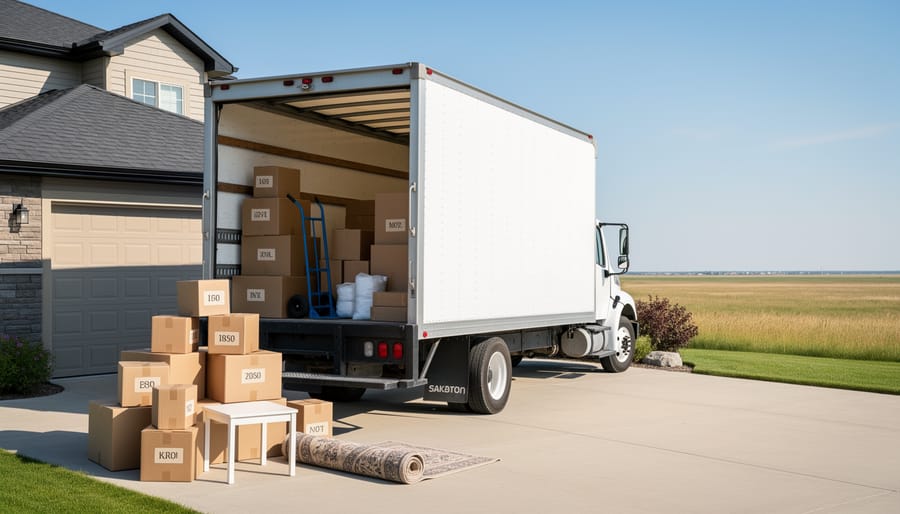
Moving truck rental costs in Saskatoon vary significantly based on your specific moving needs, making it essential to understand what drives pricing before you request quotes. For a small local move, say, a one-bedroom apartment across town, you might spend under $100 for a cargo van rental with limited mileage. At the other end of the spectrum, relocating a large household from Saskatoon to another province could run several thousand dollars once you factor in the truck size, distance, rental duration, and additional services.
The pricing landscape centers on a few primary variables. Truck size matters most for the base rate, a cargo van suitable for a studio apartment costs considerably less per day than a 26-foot truck designed for a four-bedroom home. Distance determines whether you pay per mile from the start or receive an included mileage allowance, with long-distance one-way moves priced differently than local rentals returned to the same location. Rental duration affects your total as well, since companies structure rates by the hour, day, or multiple days depending on your needs.
Major providers like U-Haul, Penske, and Budget serve Saskatoon with different truck sizes and booking processes, each with its own pricing approach. U-Haul offers vehicles ranging from pickup trucks and cargo vans to 29-foot trucks across more than 20,000 locations, while Penske provides cargo vans through 26-foot trucks at over 2,000 locations across the USA and Canada. Because rates fluctuate based on demand, season, and specific routes, the best way to set realistic expectations for your move is to compare online quotes directly from multiple companies, specifying your exact dates, truck size, and pickup and drop-off locations.
Cost Breakdown: Understanding Your Rental Invoice
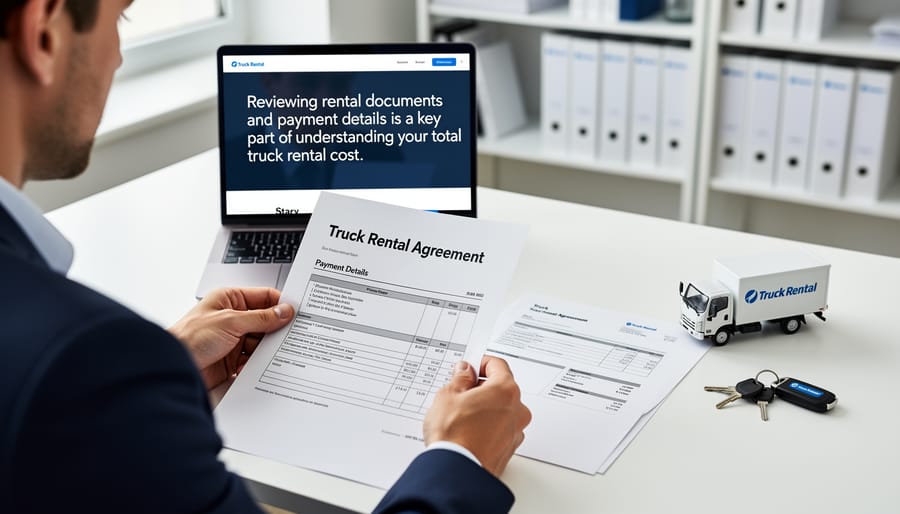
Base Daily Rental Rate
The base rental rate is your starting point when calculating truck rental costs. Most companies structure their pricing either by the day or by the hour, depending on the rental type and duration. Local moves within Saskatoon typically use daily rates, while some providers offer hourly pricing for shorter rentals. One-way moves to other cities usually come with a flat base rate that covers the rental period.
Truck size directly impacts your base rate. Smaller vehicles like cargo vans and pickup trucks cost less per day than larger moving trucks. U-Haul offers a full range from pickup trucks and cargo vans up through 10-foot, 15-foot, 20-foot, 26-foot, and 29-foot trucks, each priced at different daily rates. Penske provides cargo vans and trucks in 12-foot, 16-foot, 22-foot, and 26-foot sizes, with pricing scaled to vehicle capacity.
Timing affects your rate as well. Weekend rentals sometimes carry different pricing than weekday bookings, and rates can fluctuate based on seasonal demand. The base rate you see when booking online represents just the foundation of your total cost. Additional charges for mileage, insurance, fuel, and equipment get added on top, which is why understanding each component helps you budget accurately for your Saskatoon move.
Mileage Charges and Distance Fees
Mileage is often the biggest variable in your final rental bill. Companies structure distance charges differently, and understanding these approaches helps you budget accurately.
Local rentals typically include a limited daily mileage allowance, commonly 50 to 100 miles per day, with per-mile charges for overages. If you’re moving across Saskatoon or within the immediate area, you’ll likely stay within these limits. Exceed them, however, and you’ll pay extra for every additional mile. Per-mile overage rates vary by company and truck size, so confirm these details when booking.
One-way long-distance rentals operate differently. When you’re driving from Saskatoon to another city and dropping the truck at a different location, many companies include higher mileage allowances or even unlimited miles in the base rate. This pricing reflects that the company needs to reposition the truck anyway. One-way moves usually carry higher upfront costs but remove the uncertainty of mileage overages.
Some providers charge per mile from the first mile with no included allowance, while others bundle mileage into the daily rate. Always ask whether mileage is included, what the allowance covers, and what overage rates apply. This clarity prevents surprise charges when you return the truck.
Additional Fees and Optional Charges
Beyond the base rental rate and mileage charges, several additional costs can quickly add up on your moving truck rental invoice. Understanding these fees upfront helps you budget accurately and avoid surprises when you return the truck.
Most rental companies charge for the following:
- Insurance and damage protection plans, typically ranging from basic coverage to comprehensive collision damage waivers
- Fuel charges if you don’t return the truck with a full tank, often at premium rates plus a service fee
- Environmental or vehicle licensing fees, which vary by province and rental company
- Equipment rentals such as dollies, furniture pads, and moving blankets
- Late return penalties, charged by the hour or day beyond your reservation time
- Provincial and federal taxes on the total rental amount
Insurance deserves special attention. While your personal auto policy or credit card may cover rental trucks, many don’t extend to vehicles over a certain size. Verify your existing coverage before declining the rental company’s protection plan. Fuel policies vary, but most require you to return the truck with the same fuel level as pickup. Companies charge significantly more per litre if they refuel for you.
Equipment rentals seem inexpensive individually but add up fast. A dolly might cost $10 per day, furniture pads $15, and moving blankets another $10. If you’re renting for three days and need all three items, that’s an extra $105. After-hours pickup or dropoff may incur additional fees at some locations, though policies differ by company.
Read your rental agreement thoroughly before signing. Ask about every line item you don’t understand, and confirm what’s included versus what costs extra. This five-minute review can save you hundreds in unexpected charges.
Cost by Truck Size: Matching Your Needs to Your Budget
Choosing the right truck size is one of the most important decisions you’ll make when planning your rental. Too small and you’ll waste time making multiple trips or risk running out of space. Too large and you’ll pay for capacity you never use while navigating a bigger vehicle than necessary.
Truck rental companies categorize their fleets by cargo area length, and each size corresponds to typical home sizes. Penske’s sizing guide offers clear benchmarks: a cargo van handles up to one room of belongings, a 12-foot truck works for one to two rooms, a 16-foot truck accommodates two to three rooms, a 22-foot truck fits three to five rooms, and a 26-foot truck handles five to seven rooms. U-Haul’s lineup includes similar options, cargo vans, 10-foot, 15-foot, 20-foot, 26-foot, and 29-foot trucks, along with pickup trucks for very small moves.
The table below shows how truck sizes map to common living situations and general cost considerations for 2026:
| Truck Size | Recommended For | Cost Consideration |
|---|---|---|
| Cargo Van/Pickup | Studio, dorm room, small office | Lowest rates; best for minimal belongings |
| 10-12 ft | 1-2 bedroom apartment | Budget-friendly for small households |
| 15-16 ft | 2-3 bedroom apartment/small home | Mid-range pricing; versatile option |
| 20-22 ft | 3-4 bedroom home | Higher cost but avoids second trips |
| 26 ft | 4-5+ bedroom home, large household | Premium rates; maximizes single-trip efficiency |
Larger trucks command higher daily rates and typically burn more fuel, but they can save you considerable money by eliminating the need for multiple rentals or return trips. If you’re moving a three-bedroom home and try to squeeze everything into a 12-foot truck, you’ll likely need a second rental day plus extra mileage charges, quickly erasing any savings from the smaller base rate.
When you’re unsure between two sizes, going one step larger usually makes sense. The incremental cost difference is modest compared to the risk of running out of space mid-move. Most rental companies display truck dimensions and cubic footage on their websites, and many offer packing calculators to help estimate your needs based on an inventory of your belongings.
What Affects Your Moving Truck Rental Price?
Local vs. Long-Distance Moves
Local rentals work differently than long-distance moves, and each pricing structure fits different situations. When you rent a truck locally in Saskatoon, you pick it up and return it to the same location. Companies typically charge a daily or hourly base rate plus a per-mile fee, with most local rentals including a limited mileage allowance. You pay for each mile beyond that limit, which keeps costs predictable for short moves within the city or nearby areas.
One-way long-distance rentals follow a different model. You pick up the truck in Saskatoon and drop it off in another city, which means the rental company must reposition that vehicle. This drives up the base cost compared to local rentals, but long-distance moves often include unlimited or generous mileage allowances since the company expects you to drive hundreds or thousands of miles. The pricing reflects both the distance and the demand for trucks traveling in that particular direction. If you’re planning a major relocation, exploring long-distance container steps can reveal alternative options that might better suit your timeline and budget.
Rental Duration and Timing
Rental duration significantly impacts your total cost. Most companies in Saskatoon offer both daily and hourly rates, short local moves might qualify for hourly pricing (typically 4-8 hours), while longer jobs default to daily rates. If you need the truck for multiple days, ask about multi-day discounts; many providers reduce the per-day rate for rentals extending beyond 48 hours.
Timing matters considerably. Peak moving season, late May through early September, brings higher demand, which often means elevated rates and fewer available trucks. Book early during these months to secure reasonable pricing. Conversely, moving in late fall or winter typically offers better availability and more competitive rates.
Weekends carry premium pricing at most rental companies, as they’re the most popular moving days. If your schedule allows, picking up a truck on a Tuesday or Wednesday can save money and guarantee better truck selection. Flexibility with your move date translates directly into cost savings.
Pickup and Drop-off Location
Where you pick up and drop off your rental truck directly impacts your total cost. Saskatoon’s urban location works in your favor, larger centers typically have multiple rental locations from major providers, which creates competitive pricing and better availability. When you have several U-Haul, Penske, and Budget locations to choose from, you’re less likely to face inflated rates from limited inventory.
One-way rentals between cities introduce a different pricing dynamic. Companies charge based on supply and demand in both directions. If many people are moving from Saskatoon to Calgary but fewer are going the opposite way, you’ll likely pay more for the Saskatoon-to-Calgary route because the company needs to reposition trucks. Peak moving corridors between major cities can command premium one-way rates, while less common routes may cost less or more depending on current truck availability at each end.
Local rentals where you return to the same Saskatoon location typically offer more straightforward pricing, since the company doesn’t need to account for repositioning costs or truck imbalances.
Major Rental Companies Serving Saskatoon
Several well-established rental companies serve Saskatoon, each offering different fleet options and booking experiences. Comparing providers helps you find the best match for your specific move, whether you’re relocating across town or to another province.
The main truck rental companies available to Saskatoon residents include:
- U-Haul operates over 20,000 locations and has a confirmed Saskatoon presence, offering trucks from cargo vans up to 29-foot trucks with online booking and instant pricing
- Penske maintains more than 2,000 pickup and dropoff locations across the USA and Canada, with trucks ranging from cargo vans (1 room) to 26-foot trucks (5-7 rooms)
- Budget provides truck rentals throughout Canada through, with a straightforward booking process for Canadian customers
Each company structures its pricing differently. U-Haul’s online platform lets you see quotes immediately when you enter your move details, making it easy to compare truck sizes and dates. Penske’s sizing guide clearly matches truck capacity to room count, which helps first-time renters choose the right option. Budget focuses on the Canadian market with dedicated local support and billing.
Fleet availability varies by provider and season. U-Haul’s extensive network means more pickup locations, while Penske’s detailed room-based sizing takes the guesswork out of truck selection. Budget’s Canada-specific approach may offer advantages for domestic moves within Saskatchewan or to other provinces.
Getting quotes from all three providers gives you a complete picture of your options. Rental rates, included mileage, insurance requirements, and equipment availability differ across companies. Some movers also explore moving container benefits as an alternative that combines DIY packing with professional transportation.
Book directly through each company’s website to see current availability and compare total costs for your specific move dates and truck size needs.
DIY Truck Rental vs. Professional Moving Services

Deciding between renting a truck yourself and hiring professional movers comes down to balancing cost against convenience, time, and physical capability. Both approaches have clear advantages and trade-offs worth weighing before you commit.
Renting a truck makes the most sense when you’re working with a tight budget and have the time and physical ability to handle the move yourself. If you’re relocating a small apartment, moving locally within Saskatoon, and can recruit friends or family to help, a DIY rental keeps costs low while giving you complete control over your timeline. You’ll pack at your own pace, load on your schedule, and avoid coordinating with a moving crew. For straightforward moves without fragile antiques or heavy furniture, truck rental offers solid value.
However, DIY moving requires significant physical work and time. You’re responsible for all packing, loading, driving a large vehicle you may not be comfortable with, unloading, and returning the truck. The process typically takes an entire day or longer, and you risk injury or property damage without professional equipment and techniques. If you’re moving long-distance, lack experience driving box trucks, or have a large home with bulky items, the money saved may not offset the stress and physical toll.
Pros
- DIY rental: Significantly lower upfront cost with control over your moving schedule.
- DIY rental: Complete flexibility to pack and load at your own pace without crew coordination.
- Professional movers: All labor included with trained crews handling heavy lifting and logistics.
- Professional movers: Comprehensive insurance coverage and accountability for your belongings.
- Professional movers: Expert room-by-room packing techniques that protect fragile items and maximize efficiency.
Cons
- DIY rental: Physically demanding work with risk of injury or damage to your belongings.
- DIY rental: Requires driving and maneuvering an unfamiliar large vehicle, especially challenging on long trips.
- DIY rental: Time-intensive process that can stretch across multiple days when you account for packing, loading, driving, and unloading.
- Professional movers: Higher cost that typically runs several times more than truck rental alone.
- Professional movers: Less flexible scheduling as you work around the moving company’s availability.
Professional moving services cost considerably more but include everything: labor, equipment, insurance, and expertise. Companies like Ottawa’s Smart Move offer comprehensive relocation solutions with trained crews who know how to pack efficiently, protect your valuables, and navigate the logistics of both local and long-distance moves. Their eco-friendly practices and customer-focused approach take the stress out of what can otherwise be an overwhelming experience. For long-distance relocations, large homes, time-sensitive moves, or situations where you have physical limitations or valuable items, professional movers deliver peace of mind that justifies the investment.
Your choice ultimately depends on your specific situation. Consider your budget, how much time you have, your physical capability, the complexity of your move, and what your time and energy are worth. Getting quotes for both options helps you make an informed decision about which moving solution truly fits your needs.
How to Book Your Saskatoon Truck Rental
Booking a moving truck rental in Saskatoon is straightforward when you follow a systematic approach. Start the process at least two to three weeks before your move date, earlier during peak moving season from May through September when availability tightens and rates may increase.
- Determine the truck size you need based on your home’s size. A cargo van works for studio apartments, a 12-foot truck handles one to two rooms, a 16-foot truck fits two to three rooms, a 22-foot truck accommodates three to five rooms, and a 26-foot truck suits five to seven rooms or larger homes.
- Request quotes from multiple providers serving Saskatoon. Visit U-Haul’s website for instant online pricing, check Budget’s Canadian truck rental site at, and explore Penske’s options across their 2,000-plus locations in the USA and Canada.
- Compare the total cost for each provider, not just the base daily rate. Review what mileage is included, per-mile charges if you exceed the allowance, fuel policy, insurance options, environmental fees, taxes, and any equipment rental costs for dollies or furniture pads.
- Book your reservation online once you’ve selected the best option. Confirm your pickup location in Saskatoon and verify the exact address, operating hours, and whether after-hours pickup is available if needed.
- Review the cancellation policy carefully before finalizing your booking. Understand any fees, how far in advance you must cancel, and whether you can modify your reservation dates or truck size.
- Gather the required documentation before pickup day: a valid driver’s license, a credit card in the renter’s name, and proof of insurance if you’re declining the rental company’s coverage.
U-Haul’s online booking system provides instant pricing and confirmation, making it easy to lock in your reservation quickly. Print or save your confirmation details and contact information for the pickup location. If your plans change, contact the rental company immediately rather than simply not showing up, as no-show policies often result in charges without refund.
Tips for Saving Money on Your Truck Rental
Timing your rental strategically can trim hundreds of dollars from your total cost. Book at least two weeks in advance, rental companies typically offer better rates and wider truck selection when you reserve early. You’ll also avoid last-minute price hikes during high-demand periods.
Move mid-week if possible. Weekday rentals often cost less than weekend bookings, and you’ll encounter lighter traffic when loading and unloading. Avoid month-end dates and the peak summer moving season when demand drives prices up and availability down.
Choose your truck size carefully. Renting a larger truck than you need wastes money on higher daily rates and fuel costs. Conversely, picking too small a truck may force you to make multiple trips or rent twice, costing more in the long run. Review the sizing guides from providers like U-Haul and Penske to match your home size accurately.
Return the truck with a full fuel tank. Refueling fees charged by rental companies exceed what you’d pay at a gas station. Review your insurance coverage before accepting rental company policies, your credit card or auto insurance may already cover the truck, making additional protection unnecessary.
Pack efficiently to fit everything in one trip. Use furniture pads and tie-downs to maximize cargo space and protect your belongings. Smart planning reduces your total rental time and mileage charges without compromising the safety of your move.
Common Questions About Saskatoon Moving Truck Rentals
Renting a moving truck in Saskatoon raises practical questions, and having clear answers helps you plan your move with confidence. Here are the most common questions people ask when booking truck rentals.
What’s included in the rental price?
The base rental price typically covers the truck for the rental period (daily or hourly rate) and a set mileage allowance for local moves. You’ll pay separately for fuel, insurance or damage protection, any extra miles beyond the included amount, environmental fees, taxes, and optional equipment like dollies or furniture pads.
Do I need special insurance for the truck?
Rental companies offer damage protection, but it’s not always mandatory. Check whether your auto insurance policy or credit card provides coverage for rental trucks, many do, which can save you the insurance fee. Read your existing policies carefully before deciding.
What size truck do I need for a 2-bedroom apartment?
For a typical 2-bedroom apartment, a 15′ to 16′ truck works well for most situations. According to Penske’s sizing guide, a 16′ truck handles 2-3 rooms comfortably, while U-Haul offers 15′ and 20′ options that fit this range.
Can I rent a truck one-way from Saskatoon to another city?
Yes, major rental companies like U-Haul and Penske offer one-way rentals across Canada. Pricing differs from local rentals, you’ll typically pay a higher base rate but may get unlimited mileage included, depending on the route and company.
Late returns usually trigger additional fees calculated by the hour or day, and in peak season, delaying your return might mean someone else misses their reserved pickup. Call the rental location immediately if you’re running late, some companies offer grace periods or can adjust your contract rather than charging penalty rates.
Most rental companies stock moving equipment beyond just the truck. U-Haul locations typically rent furniture dollies, appliance carts, moving blankets, and hand trucks. Budget includes some basic equipment with certain rentals, while Penske offers similar add-ons. Ask when you book what’s available and what each item costs, so you can budget accordingly and have the right tools on moving day.
Booking timelines matter more than many people realize. For local moves during off-peak months, a week’s notice often works, but summer weekends and month-end dates book up fast, sometimes weeks in advance. U-Haul’s online reservation system shows real-time availability and lets you secure a truck instantly. If you’re planning a one-way move or need a specific larger truck size like a 26-footer, book at least two to three weeks ahead to guarantee availability at your preferred Saskatoon pickup location.
When you weigh the logistics of renting, driving, loading, and unloading a truck yourself, some people realize they’d rather choose a moving company that handles everything. Professional movers cost more upfront but eliminate the physical labor, time commitment, and stress that come with DIY moves. Evaluate what your time and energy are worth alongside the rental price to make the choice that truly fits your situation.
Understanding truck rental costs in Saskatoon empowers you to choose the moving solution that fits your budget and circumstances. Your total expense depends on truck size, how far you’re traveling, how long you need the vehicle, and which add-ons you select. No two moves are identical, so getting quotes from multiple providers, U-Haul, Penske, Budget, gives you a clearer picture of what you’ll actually pay.
Book early, especially if you’re moving during peak season or at month-end, to secure better availability and potentially lower rates. Compare what’s included in each quote, from mileage allowances to insurance options, so you aren’t surprised by the final invoice.
Weigh whether a DIY truck rental or professional moving services better suits your situation. If you’re downsizing, check out these downsize tips to simplify your move. For those who want a stress-free alternative, professional movers like Ottawa’s Smart Move offer comprehensive, eco-friendly relocation services with transparent pricing and customer-focused care, handling everything from packing to final placement. Evaluate all your options when choosing moving solutions, and select the approach that delivers the right balance of cost, convenience, and peace of mind for your relocation.